
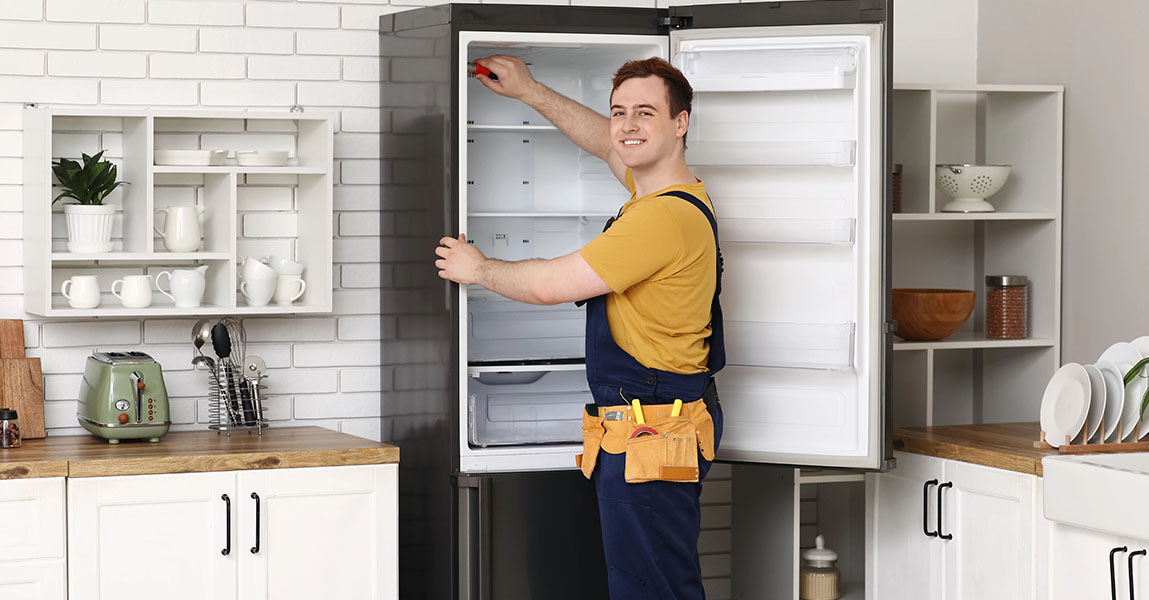
Common Causes of a Fridge Door That Keeps Popping Open
When your fridge door won’t stay shut, it can feel like a never-ending battle. We understand how frustrating it is to find your refrigerator ajar hours after closing it. Consequently, this issue can lead to spoiled food, temperature inconsistencies, and even water pooling on the floor.
Firstly, one of the most common reasons is a damaged or misaligned door seal. The gasket that wraps around the edge of the door plays a crucial role in creating a vacuum seal. If that seal is torn, dirty, or worn out, it will lose its grip. In other words, the door won’t latch properly even when pushed shut.
Secondly, overloaded shelves can contribute to the problem. When items push up against the door from the inside, they may force it open slightly or prevent it from sealing all the way. Moreover, older fridges may have alignment issues in the hinges, which cause the door to lean or tilt.
Checking the Door Gasket for Damage or Dirt
Our first recommendation is to inspect the gasket closely. Often, people overlook how much grime or food residue can build up in the folds of the rubber. Therefore, cleaning it thoroughly with warm soapy water and a toothbrush might solve the issue. In addition, you should check for cracks or areas where the gasket no longer hugs the fridge body tightly.
If the gasket feels brittle or has visible gaps when the door is closed, that’s a clear sign it’s time for a replacement. To clarify, when a gasket doesn’t compress correctly, the suction effect that keeps the door closed gets lost. That’s when it starts popping open without any obvious reason.
For people dealing with an older unit or one that’s been repaired multiple times, the best step might be to look into professional fridge repair in Burbank, especially when a simple fix doesn’t work.
Checking the Level and Alignment of the Fridge
Not every fridge door issue is due to the door itself. Often, a refrigerator that isn’t level can lead to a door that swings open on its own. That is to say, if the front legs of the unit are lower than the back, gravity will work against you. Consequently, the door might slowly drift open even after being shut.
To fix this, check the leveling legs beneath the unit. Use a bubble level tool across the top surface of the fridge. Raise the front slightly if needed by turning the adjustment feet. Most importantly, make sure both sides are balanced to prevent side tilting as well.
Sometimes the hinges can also wear down over time. Worn-out hinges can loosen or bend, making it harder for the door to close tightly. If you spot sagging or hear clicking sounds when closing the door, it may be time for a hinge repair or replacement. You can learn more about options for refrigerator repair services in Burbank that address hinge alignment and gasket sealing.
Interior Organization and Obstructions
In some cases, the problem has nothing to do with the door components. If containers or large food items are placed too close to the shelves near the front, they can physically push the door open or block it from sealing. This happens often with upright bottles, frozen pizzas, or bulky leftovers that stick out past the edge of the shelf.
Above all, keeping your fridge organized matters. Likewise, placing heavier items on lower shelves can prevent tipping that pushes things toward the door. We recommend leaving at least an inch of space between food and the door’s interior.
Another factor to consider is how the door bins are arranged. Items that shift easily, like water bottles or jars, may roll toward the edge and jam the door. Rearranging bins or removing excess weight from the door can relieve pressure and allow the door to seal completely.
In more severe cases where no amount of reorganization helps, our team has seen solutions that involve adjusting door cam risers or internal shelves. Sometimes, a quick contact with a local appliance repair team in Burbank can bring clarity when the cause isn’t so obvious.
The Role of Air Pressure and Interior Cooling
Another overlooked issue that can keep a fridge door from sealing is air pressure. When you open and close the door frequently, warm air rushes in and meets the cooler inside. Consequently, a small vacuum effect forms, which can resist the door sealing completely if the gasket isn’t flexible enough.
In addition, frost buildup inside the freezer or fridge can create obstructions around the frame. This can happen when door seals fail or when the defrost cycle isn’t functioning properly. In these situations, even a new gasket might not solve the root issue.
It’s wise to check your unit’s temperature and cooling performance at this point. If food is defrosting in the fridge or ice is forming around the back panel, there may be a larger issue with the fan or defrost system. Issues like these are commonly handled by professionals who specialize in appliance repair Burbank, especially when internal airflow needs to be restored.
When It’s Time to Replace Parts or Get Help
If you’ve tried all the above steps and your fridge door still won’t stay shut, then the issue may lie with worn mechanical components. That includes weak magnets in the door gasket, bent hinge pins, or a cracked inner liner that throws the seal off. Replacing these parts is often cost-effective compared to food waste or compressor damage.
Older models, especially those ten years or more in service, may begin to show cascading issues from prolonged wear. At this stage, a full assessment of the fridge’s condition helps determine whether repair or replacement is the better choice.
Sometimes, addressing just one small issue—like a weak hinge spring or an uneven door bin—can resolve the larger problem. However, if you’re stuck or uncertain about what to adjust, we always recommend professional evaluation. Fridge door issues may seem minor, but they often lead to larger repair needs when ignored.
FAQs
Why does my fridge door keep popping open after I close it?
This usually happens when the gasket is weak or the fridge isn’t level. A door that isn’t sealed properly may reopen due to internal air pressure or obstruction inside.
How do I know if the gasket on my fridge needs replacement?
Check for cracks, tears, or brittleness. If the gasket doesn’t create resistance when you pull the door open or shows visible gaps, it’s time to replace it.
Can I fix a sagging fridge door myself?
Sometimes you can adjust the leveling feet or tighten hinge screws. However, hinge replacement often requires a technician with the right tools and parts.
Does an overloaded fridge cause the door to stay open?
Yes, especially if items are pressing against the door or bins are too full. Reorganizing contents to avoid contact with the door frame can help.
What happens if I ignore a fridge door that won’t stay shut?
Ignoring the issue leads to food spoilage, excess energy usage, and possible compressor failure. It’s best to fix the problem quickly to avoid costly damage.