
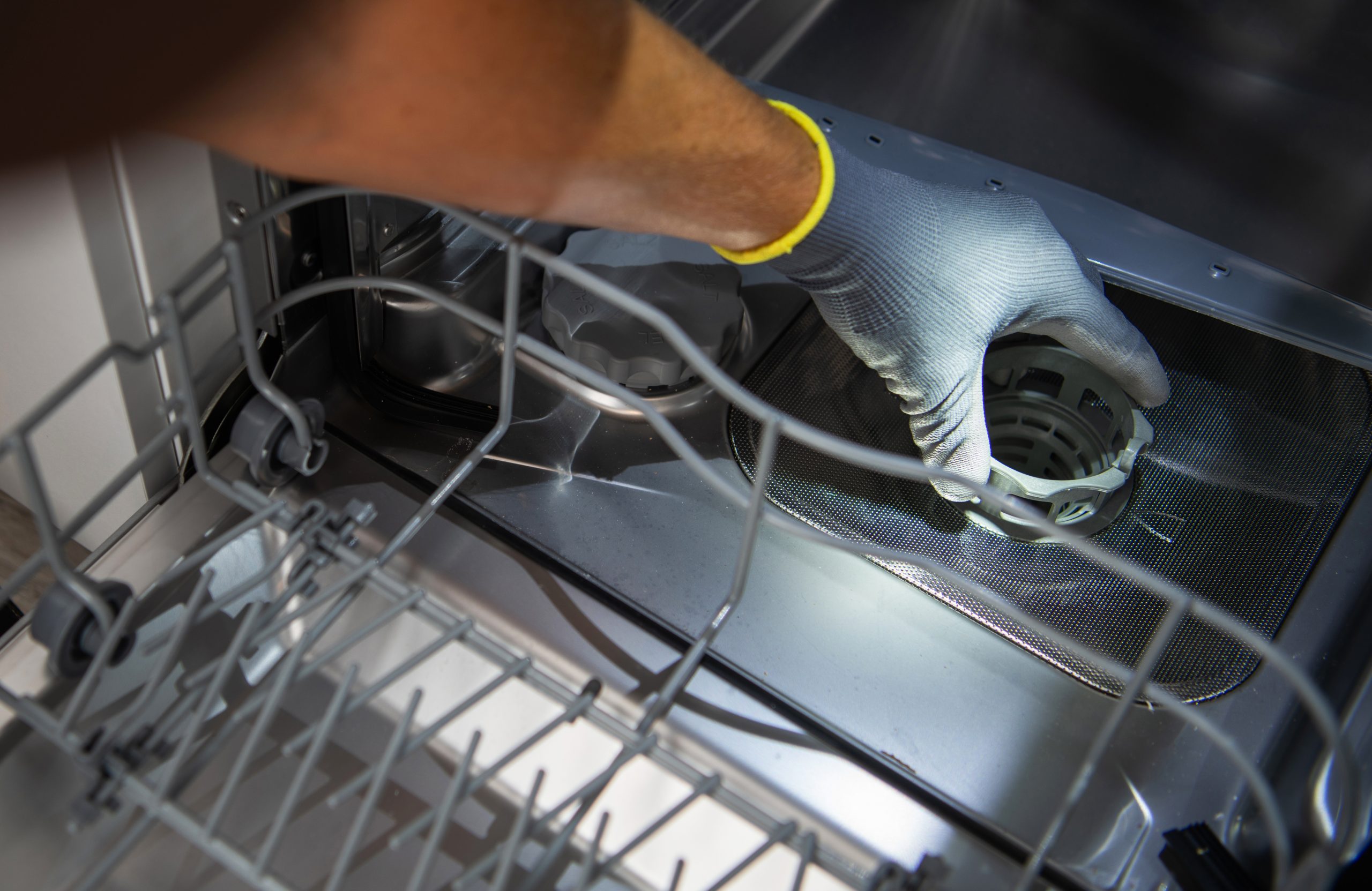
Most people miss the dishwasher hidden mess because the machine still “looks” clean from the inside. However, when that hidden buildup starts blocking water flow, it can turn into cloudy glasses, gritty plates, and that sour smell that never fully goes away. At Quick & Pro Appliance Repair, we see this exact problem in Burbank homes all the time, and it usually comes down to one small area that traps food and grease.
The One Spot Most People Never Check
That spot is the filter area and the sump zone right beneath it, where the drain pulls water out. In other words, it is the dishwasher’s “catch pocket,” and it collects everything your dishwasher couldn’t dissolve. As a result, the machine may still run and finish cycles, but the wash water gets dirtier and dirtier during the same load.
Why This Area Builds Up So Fast
Firstly, modern dishwashers use less water, so there is less rinsing power to carry debris away. Moreover, many households run quick cycles, and those shorter cycles do not always break down fats and starches. Consequently, tiny scraps settle into the filter, and a film forms around the sump cover, which later feeds odor and bacteria.
What The Hidden Mess Looks Like in Real Life
The dishwasher hidden mess is not always obvious like a big chunk of food. For example, it can be a slippery gray paste, coffee grounds, rice grains, label glue, or even bits of broken glass from a cup that cracked weeks ago. Meanwhile, grease can cling to the underside of the filter housing, so you do not notice it until you touch it.
The Symptoms You Notice First
You might notice your dishes feel gritty after a cycle, or the machine smells worse right after it finishes. However, another common sign is that the dishwasher seems louder during draining, because the pump is working harder. To clarify, a struggling drain path can make the unit sound like it is gulping water or humming longer than it used to.
A Simple Check You Can Do in Minutes
Start by pulling out the bottom rack and locating the filter assembly on the floor of the tub. Then twist and lift it out, and rinse it under hot water. After that, use a soft brush to remove slime and stuck-on debris, because wiping alone often leaves residue behind.
Cleaning The Sump Area Safely
Once the filter is out, look into the opening below it. In addition, check around the plastic cover and the edges where gunk likes to hide. Remove visible debris with a paper towel, and rinse with warm water. Certainly, avoid forcing tools deep inside, because you do not want to damage a seal or shift a component out of place.
If the smell persists, it may be time to book a proper inspection through dishwasher repair Burbank, because the dishwasher hidden mess sometimes spreads into the drain hose or check valve where it is harder to reach.
The “Clean Cycle” Myth and Why It Doesn’t Fix This
Many people run a cleaning tablet and assume the job is done. However, tablets mainly work on exposed surfaces, and they cannot remove clumps trapped under the filter or lodged in the sump edges. Therefore, the dishwasher can smell fresh for a day or two, but the odor comes back once warm water hits the same old buildup again.
When It Becomes More Than a Smell Problem
A neglected filter area can cause standing water, slow draining, or poor spray performance. Consequently, food stays on plates, and the heater may struggle because the water gets dirty quickly. If you have already cleaned the filter and still see issues, Quick & Pro Appliance Repair usually checks water fill, spray arm flow, and drain performance as one full system.
How Other Appliances Create Dishwasher Problems Too
Sometimes the root cause is not only inside the dishwasher. For instance, a household that overloads laundry loads can have more lint and residue in the home, which ends up on kitchen towels and dishes. Likewise, when a laundry setup needs attention, washer repair Burbank can prevent the kind of residue transfer that makes dishes feel “filmy” even after washing.
Dryers can play a role too, because heavy lint buildup in a laundry area often means more dust and fibers floating around the home. Moreover, those fibers can stick to damp dish surfaces and create that odd “not quite clean” feeling. If your laundry space has airflow issues, dryer repair Burbank can help reduce that background mess that keeps showing up everywhere.
Food Storage Habits Matter as Well
If your fridge is running warm or sweating, food can spoil faster and create more greasy, sticky residue on containers and plates. As a result, the dishwasher has to fight heavier soils every cycle. When storage temperatures are off, fridge repair Burbank can help stabilize cooling so leftovers stay fresher and dishes rinse cleaner before they ever enter the dishwasher.
A Practical Routine That Keeps The Hidden Spot Clean
Clean the filter every two to four weeks if your dishwasher runs often. Secondly, scrape plates instead of rinsing them fully, because dishwashers are designed to handle light soil, not chunks. Moreover, run hot water at the sink for a few seconds before starting the cycle, so the dishwasher begins with warm water instead of cold. In short, a small routine prevents the dishwasher hidden mess from growing into a repair call.
When To Call Quick & Pro Appliance Repair
If you find standing water, frequent odor returns, or grinding sounds during drain, it is time to get it checked. However, if you already cleaned the filter and the results did not improve, the problem could be in the pump, hose, or drain connection. Quick & Pro Appliance Repair can diagnose the full path and fix the real restriction, not just the symptom.
FAQs
What is the most common hidden spot that causes dishwasher odors?
The filter and sump area under the bottom rack is the most common source. Therefore, even if the tub looks clean, trapped grease and scraps below the filter can keep feeding smells after each cycle.
How often should I clean my dishwasher filter?
For most homes, every two to four weeks works well. However, if you run daily loads or wash lots of greasy cookware, cleaning weekly can prevent buildup and improve draining.
Can dishwasher cleaning tablets replace filter cleaning?
Not really, because tablets mainly clean surfaces they can reach. In other words, they cannot remove clumps and slime trapped under the filter or inside the sump edges.
Why do my dishes feel gritty even after a full cycle?
Grit often comes from debris recirculating in dirty wash water. Consequently, a clogged filter, weak spray, or slow drain can leave particles behind on glassware and plates.
When should I book professional dishwasher service?
If odor returns quickly, water drains slowly, or the unit makes new noises, get help. Moreover, a technician can check the pump, drain hose, and flow issues that basic cleaning cannot solve.