
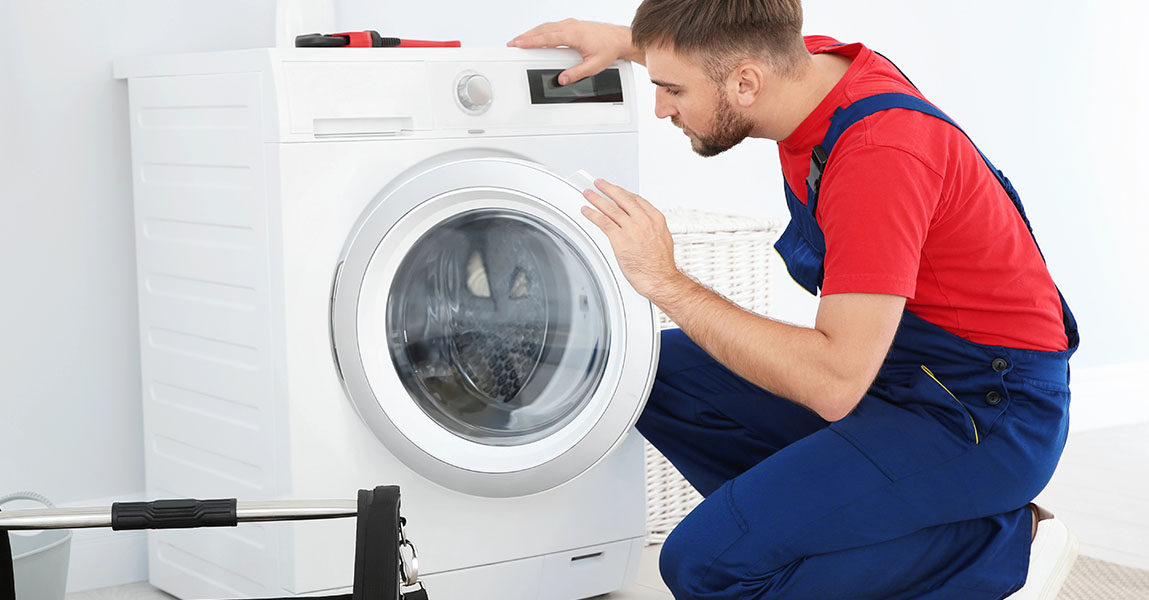
Washing machines are built to handle different types of loads, from heavy towels to delicate fabrics. Each cycle is designed with specific timing, water temperature, and spin speed. But when a washer only runs on one setting, it creates frustration and delays. We’ve seen this issue more often than you’d think. Something as small as a broken dial or a faulty sensor can lock your machine into a single mode. Our goal is to explain what causes this and how you can get back to regular laundry routines without stress.
Faulty Control Knob or Touch Panel Malfunctions
Control panels wear out over time. In washers with dials, physical knobs can loosen or strip internally. That is to say, the machine may look like it’s switching settings, but internally, it’s stuck. Touch panels work differently, but moisture and age often make certain buttons unresponsive. This leads the washer to default to a single working cycle while ignoring others.
We check how each button or dial responds when pressed. Sometimes, a soft reset helps. Other times, replacement is needed. If a washer is older, one worn-out knob can prevent access to any other function. It’s a small part, but it can stop the entire machine from working properly.
You can find more insights about this issue and how we help fix it on our page for washer repair in Burbank.
Issues with the Control Board Logic
Most washers rely on an electronic control board to manage their cycles. If this board starts to fail, it may only run the most basic setting. Unlike mechanical issues, electronic faults don’t always show obvious signs. However, we often find blinking lights, frozen screens, or repeated errors as early clues.
Boards can fail after power surges or if a wire inside gets loose or corroded. In some cases, the board reads the wrong input from sensors and ignores the user’s selected settings. That means the washer goes into a default mode no matter what you choose.
We usually test these boards with a multimeter to confirm if signals are reaching the right components. Once the failure is confirmed, a new board restores full function quickly.
Malfunctioning Water Temperature Sensor
Temperature sensors affect which cycles are available. For example, a washer may refuse to run cycles that require hot water if the sensor detects a cold line. This safety feature protects clothes and the washer itself, but it often confuses users.
We sometimes find broken thermistors or clogged inlet valves creating false temperature readings. These parts make the washer think it can only safely use one setting. Once replaced, the full cycle range comes back.
Temperature issues are tricky because water still flows, just not at the right heat. That’s why we look closely at the sensor readings and flow temperature before and after the heater.
If you’re unsure where to start, our appliance repair in Burbank guide covers how we check sensors and wiring safely.
Cycle Selector Settings are Misaligned
When a mechanical timer is misaligned, it can physically click into place but not engage the intended function. Older washers with dial timers are especially prone to this. The result is that only one position connects properly, and every other option does nothing.
We’ve seen this happen after a knob is forced or the internal cam wears out. Misalignment may not look serious, but it can stop the washer from recognizing more than one setting. To fix it, we usually reset the mechanical alignment or replace the faulty selector.
This type of repair is fast and doesn’t involve full disassembly. Once the selector is restored, users regain access to all cycles without extra effort.
Timer Motor Fails or Stops Advancing
The timer motor drives the sequence of washing actions. If this motor stops working, the machine may stall after filling or only work on a single timed cycle. Washers that depend on manual timers will appear frozen, even though one mode might still work partially.
In these cases, the timer motor fails to advance the cycle, so it gets stuck. The user can restart it manually, but it never moves forward automatically. That is often mistaken for a sensor or button issue, but the root problem is timing.
We test these motors for continuity. If they don’t respond, we replace them with compatible parts to restore proper sequencing. A working timer motor allows all cycles to run from start to finish.
Broken Lid or Door Switch Blocking Options
Every washer has a lid switch or door sensor to prevent operation while open. If this switch fails, it may block certain cycles that require high-speed spins or heating. As a result, the washer only offers one low-risk setting.
We’ve handled many cases where a simple switch was to blame. These parts are small but vital. When they malfunction, the machine assumes the door is always open. Therefore, it limits what it can safely do.
A test with a magnet or jumper wire helps confirm if the switch is bad. Once replaced, the washer no longer locks out the full cycle range. It’s a fast fix that opens up every option again.
Incorrect Water Level Detection
Modern washers adjust their cycles based on how much water they detect inside. If the pressure switch or sensor that reads water levels is broken, the washer may restrict operation to just one mode. This happens to avoid overflowing or overheating.
We check the hose leading to the pressure switch first. Often, it’s clogged or kinked. In some cases, soap buildup interferes with detection. Once cleaned or replaced, the washer starts reading accurate levels and allows more cycles.
You’ll know this is the issue if your washer either underfills or keeps draining during cycles. Once corrected, users can switch between all settings again with no restriction.
Software Glitches in Digital Control Models
Washers with digital panels sometimes glitch after power outages or unstable electricity. These systems may default to one safe mode and block user inputs. Resetting the machine sometimes works, but deeper problems can hide in firmware.
In our experience, software errors may stop the washer from saving your selected cycle. That means it restarts with the same setting no matter what you pick. We reload or reprogram these systems when needed, especially if factory reset options fail.
We also inspect the memory storage that holds user preferences. If it’s corrupt, replacing the board or updating the software restores full cycle control.
For scheduling support or more detailed help, use our form on contact us to book a visit today.
Frequently Asked Questions
Why does my washer keep going back to the same cycle even when I change it?
That often happens due to a control board glitch or a failed timer. Sometimes the knob isn’t registering the change internally.
Can I still use my washer if only one cycle works?
Yes, but it’s risky. Some fabrics may not wash properly, and issues can worsen over time. Repairs restore safe, full use.
How do I reset a washer that’s stuck on one setting?
Unplug it for 5 minutes, then plug it back in. If the problem stays, a deeper issue like a board or sensor failure may exist.
What parts usually need replacing when this happens?
Common parts include selector knobs, control boards, sensors, timer motors, and lid switches. Each one can limit cycle options.
Is this something I can fix on my own?
Minor resets are easy, but most causes require testing tools. It’s safer to have a technician check and replace the right part.