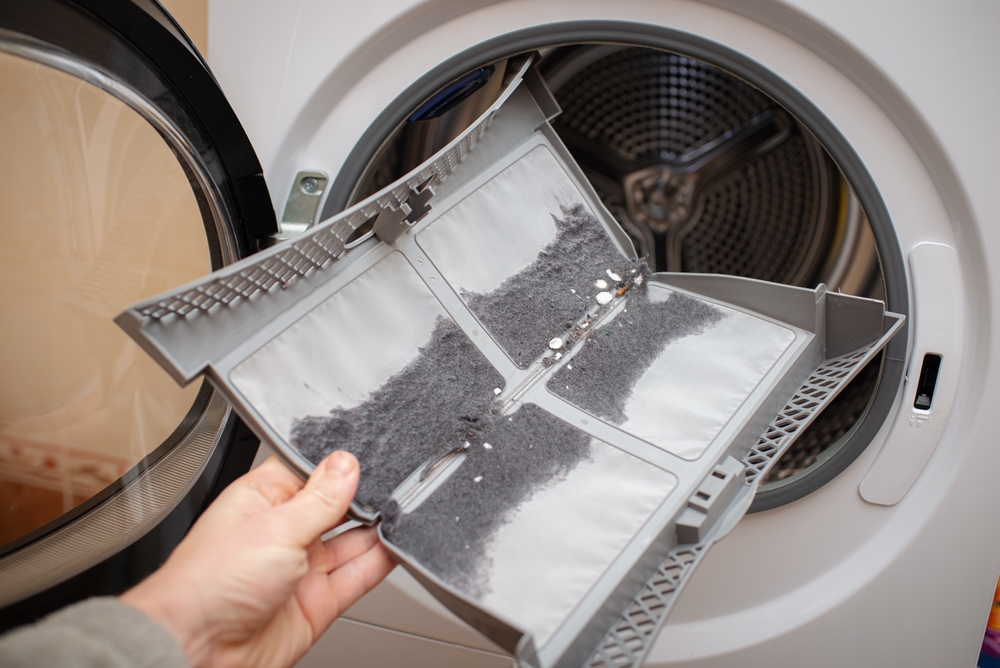
A clogged dryer vent is one of the most common reasons Quick & Pro Appliance Repair Burbank is called about a dryer that "worked fine last month." Clothes come out hot but damp. The cycle takes two or three rounds. The laundry room smells like warm lint. These signs often have little to do with the dryer itself, and a lot to do with the duct behind it.
Warning Signs of a Clogged Dryer Vent
Airflow is everything for a dryer. Hot, wet air must leave the drum and travel outdoors. When lint builds up in the duct, that moist air has nowhere to go. The following clues suggest a blocked path:
- Towels and jeans need more than one cycle to dry.
- The dryer cabinet or the top of the machine feels very hot.
- A burnt or musty smell fills the laundry area.
- Lint collects around the outside vent flap or on the floor.
- The outside flap barely moves, or does not open at all.
- The dryer shuts off early because the high-limit device trips.
If you notice two or more of these signs, check the vent before you blame the heating element. A clogged dryer vent is simple to find and often easy to correct.
Why a Clogged Dryer Vent Becomes a Fire Risk
Lint is dry, light, and highly flammable. When a clogged dryer vent traps hot air, the temperature inside the duct and the drum rises. A thick layer of lint can ignite from the heat of the machine.
The National Fire Protection Association has long reported that failure to clean dryers is a leading factor in home dryer fires. The risk grows when the duct is crushed, too long, or made of thin foil. Good airflow keeps temperatures in the safe range.
A blocked vent also strains the machine. Heating elements and thermal fuses work harder and wear out sooner. Fixing airflow protects both your home and your dryer.
Quick Airflow Check You Can Do Safely
A short test tells you a great deal about the health of your vent. It takes about ten minutes and needs no special tools.
You do not need tools to run a first test. Start by running the dryer empty on a medium heat setting. Go outside and hold your hand near the vent flap. You should feel a strong, steady flow of warm air.
A weak puff means trouble. Next, unplug the dryer and slide it away from the wall. Check that the duct is not crushed or kinked behind the machine. Look for lint packed at the connection points.
Clean the lint trap before every load and wash it with soap and water every few months. A dryer sheet film can coat the screen and block air even when it looks clean. If water does not pass through the mesh, it needs scrubbing.
We outline a similar test in our quick airflow check article, which is worth a read before you pull the dryer out.
Table: Vent Problems and What Fixes Them
Different vent problems call for different solutions. This table shows common situations and typical actions.
| Problem | Typical warning sign | What we do |
|---|---|---|
| Lint packed in the duct | Long dry times, hot cabinet | Brush and vacuum the full duct run |
| Crushed or kinked hose | Weak airflow at the outdoor flap | Replace the hose with rigid or semi-rigid duct |
| Duct run too long | Damp clothes despite a clean trap | Shorten the route or add a better exit |
| Stuck outdoor flap | Lint buildup outside | Clear the flap and test its movement |
| Foil or plastic ducting | Lint snags in ridges | Swap for smooth metal duct |
| Many tight elbows | Slow drying, heat buildup | Reroute to reduce turns |
As an industry estimate, many manufacturers limit the total duct length to about 25 feet, reduced for every elbow. Your installation manual lists the exact limit for your model.
Other Causes That Mimic a Vent Clog
Not every slow dryer has a blocked vent. Several parts can create similar symptoms, so a careful technician checks them all. A failing heating element or gas igniter produces lukewarm air. A worn drum belt or roller can leave the drum turning poorly. A weak moisture sensor can end the cycle early.
If your dryer runs hot but clothes stay damp, you can compare notes in our post on why dryers leave clothes hot but damp. For a related mechanical fault, see how to spot a failing dryer belt.
The key point is simple. Clean the vent first, since it is the quickest thing to rule out. If the problem remains, book a full inspection.
How Often to Clean the Vent
Regular care is the best defense against a clogged dryer vent. The schedule below is a sensible starting point for most Burbank homes.
Most households should clean the full duct at least once a year. Heavy users, such as large families or anyone drying pet bedding, should clean it every six months. Rooms with long duct runs or many bends also need more frequent care.
Between cleanings, keep up the daily habits. These small routines add up to a clearer duct and a calmer laundry room. Empty the lint trap after every load. Do not run the dryer while you are away from home or asleep. Leave a few inches of space behind the machine so the duct is not squeezed.
Good habits make a real difference to energy use too. The ENERGY STAR clothes dryer guide explains how efficient dryers rely on good airflow and moisture sensing.
When to Call a Professional
Some vent jobs go beyond a brush and a vacuum. Long runs, roof exits, and ducts hidden in walls need special tools and safe access. A professional also checks that the vent exits outdoors and not into a garage or attic, which is a common installation mistake.
Call a technician if the vent is behind a wall, runs through the roof, or sits more than one story up. Call if your tests show weak airflow but you cannot find the cause. Call if you smell burning, since that signals urgent risk.
During a visit, we test airflow, inspect the duct connections, and check the heating parts and safety thermostats. If the dryer itself needs work, our dryer repair service in Burbank covers the common faults. An honest quote is given after assessment.
Frequently Asked Questions
How do I know if my dryer vent is clogged?
Long drying times, a hot cabinet, and weak airflow at the outdoor flap are the main signs. A burning smell also warns of lint buildup. Test the airflow outside while the dryer runs.
Can I clean the vent myself?
Short, accessible runs can be cleaned with a vent brush kit and a vacuum. Long or hidden runs are better left to a professional. Always unplug the dryer first.
Does a clogged dryer vent damage the dryer?
Yes, over time. Trapped heat wears out thermal fuses, elements, and belts. Clearing the path often extends the life of the machine.
How long should a normal dryer cycle take?
Many loads dry in 40 to 60 minutes, as an industry estimate. Heavy items may take longer. If every load needs two cycles, check the vent.
Contact Quick & Pro Appliance Repair Burbank
Quick & Pro Appliance Repair Burbank serves homes in Burbank, California. Call or text (818) 860-8028. Our hours are daily from 7:00 am to 8:00 pm, seven days a week.